
 Website Development
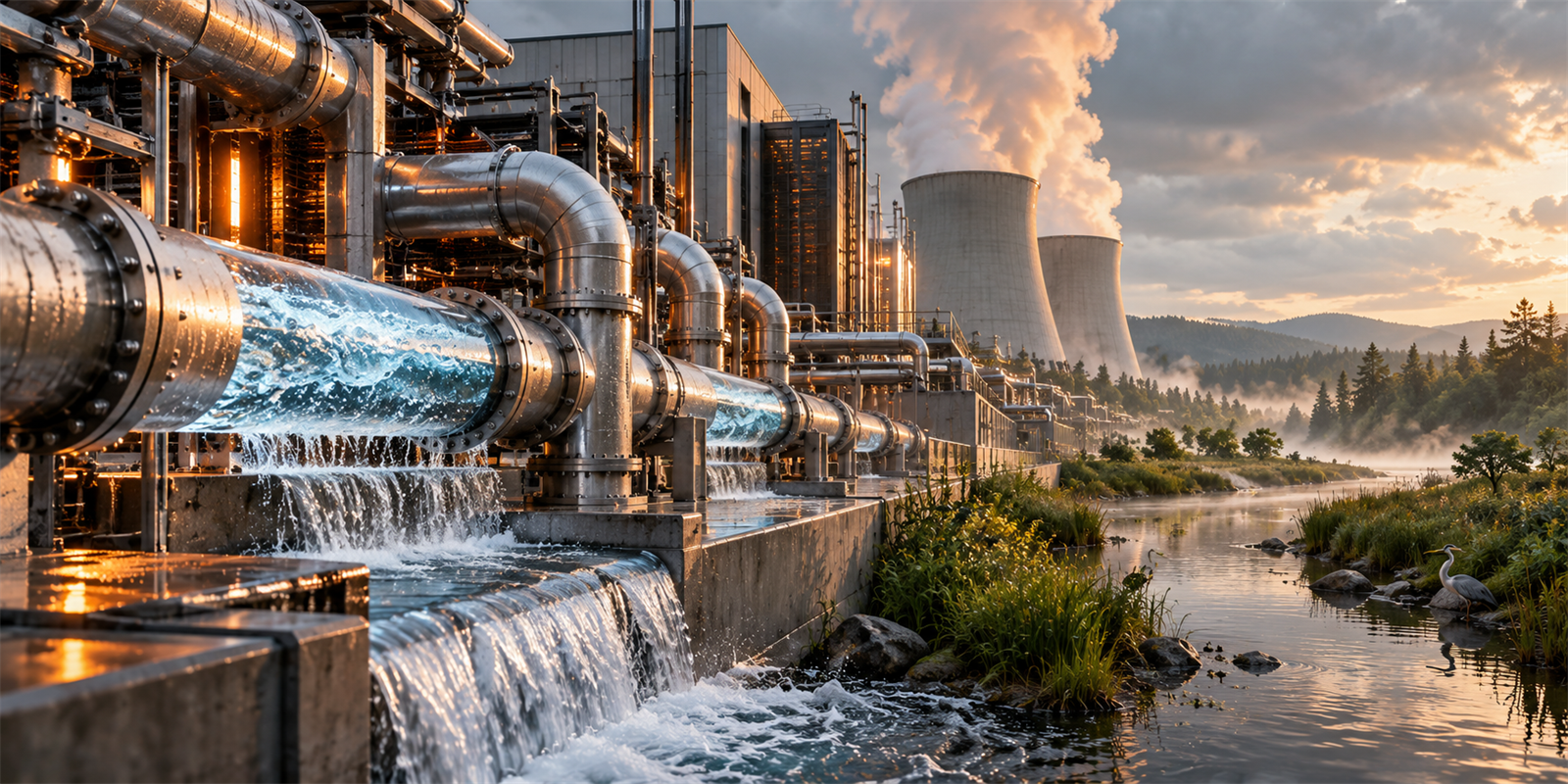
AI can be useful, but it also has a growing environmental footprint. This practical guide explains the main negative effects of AI—from electricity and water use to hardware production and e-waste—without exaggeration.
Artificial intelligence is often presented as if it lives in the cloud, somewhere weightless and invisible. We ask a question, receive an answer, generate an image, or analyse a document, and the result appears on a screen. The physical work behind that result is easy to forget.
Large AI systems run on specialised computer chips in data centres. Those centres require electricity, cooling, buildings, network equipment, replacement hardware, and supply chains that begin long before an AI model responds to a user. So, how does AI affect the environment negatively? The honest answer is not one dramatic number. It is a collection of impacts that grow as more models are trained, deployed, and used at scale.
AI can also help researchers, businesses, and communities use resources more efficiently. That benefit is real, but it does not erase the footprint of building and operating the technology. A responsible conversation has to hold both truths at the same time.
1. AI increases demand for electricity
The most obvious environmental concern is energy. Training a large model can require substantial computing power, but the ongoing use of AI matters too. Millions of prompts, image generations, searches, translations, recommendations, and automated tasks all run through data-centre infrastructure.
The International Energy Agency explains that data-centre electricity demand is rising rapidly and that AI-focused data-centre power use is growing particularly quickly. The impact depends on the model, the task, the hardware, the location, and the electricity mix supplying the facility. An AI request powered by cleaner electricity does not have the same emissions profile as one supported mainly by fossil fuels.
That variation is why simple claims such as “one prompt always uses this much energy” can be misleading. The broader point is more useful: AI is adding a new and fast-growing source of demand to electricity systems that already have to serve homes, transport, industry, and essential services.
2. More electricity can mean more emissions
Electricity is not automatically clean. When additional demand is met by coal, gas, or other carbon-intensive sources, the associated greenhouse-gas emissions increase. Data centres may also use backup generators, and the construction of buildings, cables, cooling systems, and power infrastructure creates emissions before a model is ever switched on.
This does not mean every AI company has the same footprint. Some operators purchase renewable electricity, improve efficiency, locate facilities near lower-carbon power, or invest in cleaner infrastructure. Those decisions matter. They also need to be assessed carefully, because a renewable-energy claim does not necessarily mean that every hour of a data centre's consumption is matched by new clean generation.
The environmental question is therefore not only “how efficient is the model?” It is also “where is the computing happening, what powers it, and how quickly is demand growing?”
3. Data centers need water for cooling
Powerful processors produce heat. Data centres must remove that heat to keep equipment working safely, and some cooling systems use water directly or indirectly. Water can also be involved in generating the electricity that powers the facility and in manufacturing the hardware used by it.
The local impact depends on the cooling design, climate, water source, electricity system, and location of the data centre. A facility in a water-stressed area may create a more serious local concern than one using a closed-loop or low-water cooling system in a region with different conditions.
This is one reason national averages can hide important details. A service may look efficient globally while placing pressure on a particular community's water resources. Responsible planning requires operators to disclose meaningful local water information and consider the needs of people and ecosystems around the facility.
“Digital services may feel weightless, but the infrastructure behind them still occupies land, consumes power, uses materials, and produces heat.”
4. AI hardware requires mining and manufacturing
AI depends on advanced processors, memory, servers, networking equipment, storage, buildings, and cooling systems. Producing these components requires raw materials, industrial energy, chemicals, transport, and complex international supply chains.
The environmental cost therefore begins before a model is trained. Mining can disturb land and ecosystems. Manufacturing can create emissions and industrial waste. Transport adds another layer of energy use. Even when a new chip is more efficient than an older one, rapidly expanding the total number of chips can increase the overall footprint.
This is a classic efficiency challenge: using each machine more efficiently is valuable, but efficiency gains can be overwhelmed if demand grows much faster. Responsible AI development needs both better performance per unit of computing and restraint about unnecessary expansion.
5. Short hardware cycles can increase electronic waste
AI hardware changes quickly. As operators seek newer processors, greater capacity, or better performance, older equipment may be moved, resold, stored, recycled, or discarded. The same problem applies to the wider ecosystem of routers, storage devices, batteries, phones, computers, and other electronics used to access AI services.
Electronic waste is not harmless rubbish. It can contain valuable materials that are difficult to recover and hazardous substances that require careful handling. Poor disposal can pollute soil and water and expose workers or communities to avoidable risks.
Longer equipment lifetimes, repairable designs, responsible refurbishment, transparent recycling, and better recovery of materials all matter. A powerful system should not be called sustainable simply because its software is efficient if its hardware is treated as disposable.
6. AI can encourage more consumption
The environmental impact of AI is not limited to the data center. AI can make it cheaper and faster to generate advertising, shopping recommendations, images, video, automated messages, and personalized content. That convenience can encourage more digital activity and, in some cases, more physical consumption.
This is sometimes called a rebound effect: a service becomes more efficient or affordable, so people use more of it. Efficiency is still good, but it does not guarantee a smaller total footprint if usage grows rapidly enough.
The same technology can also support better decisions—for example, reducing waste, improving logistics, helping researchers model climate risks, or making energy systems easier to manage. The outcome depends on what the system is used for and whether its benefits are large enough to justify its resource demands.
7. AI's water and energy impacts are difficult to compare
One reason this subject creates confusion is that AI systems vary widely. A short text classification task, a long reasoning request, a high-resolution image, and a video-generation workflow do not require the same amount of computing. Models also run on different hardware and in different data centres.
Public estimates can therefore look precise while hiding major assumptions. A responsible article should avoid pretending that a single figure applies to every prompt. It is better to ask for transparent reporting: energy use, water use, emissions, hardware life, location, and the method used to calculate each measure.
The lack of perfect information is not a reason to ignore the issue. It is a reason to be honest about uncertainty and improve measurement.
Is AI always bad for the environment?
No. That would be too simple and would not help anyone make better decisions. AI may help identify leaks, improve renewable-energy forecasting, reduce unnecessary travel, optimise industrial processes, support environmental monitoring, and analyse large scientific datasets.
But a possible benefit is not a free pass. A system should be assessed by what it actually replaces or improves, not by a vague promise that AI might eventually help the planet. If a tool consumes substantial resources to produce content that nobody needs, its environmental value is difficult to defend.
The right question is often: does this use of AI create enough practical value to justify the computing, energy, water, and hardware involved?
What can businesses and individuals do?
- Choose smaller or more efficient models when they are sufficient for the task.
- Avoid generating large files, images, or repeated outputs that will not be used.
- Reuse, edit, and improve useful work instead of starting from zero every time.
- Keep computers and phones in service longer when repair or upgrades are practical.
- Recycle electronics through reputable programmes rather than informal dumping.
- Ask technology providers for meaningful energy, water, emissions, and hardware information.
- Prefer AI projects with a clear benefit instead of adding AI simply because it is fashionable.
What should technology companies do?
- Publish clearer information about energy, water, emissions, and hardware lifecycles.
- Improve model and data-centre efficiency without using efficiency gains to justify unlimited demand.
- Build facilities with local water availability and grid capacity in mind.
- Use cleaner electricity and disclose how renewable-energy claims are calculated.
- Extend hardware lifetimes and design stronger refurbishment and recycling systems.
- Measure the full lifecycle impact rather than reporting only the energy used during a model run.
- Give customers controls that reduce unnecessary computation and storage.
My conclusion
So, how does AI affect the environment negatively? It increases pressure on electricity systems, can create emissions, requires cooling and water, depends on resource-intensive hardware, and contributes to a faster cycle of electronic equipment. Those impacts are serious enough to deserve honest measurement and public attention.
At the same time, the answer is not to reject every AI tool or pretend that digital technology has no benefits. The better approach is to use AI with a sense of proportion. Ask whether the task matters, choose an efficient method, avoid waste, keep hardware in use, and expect companies to explain their environmental costs clearly.
AI should become more useful without becoming an excuse for unlimited consumption. The goal is not a world without technology. It is a technology industry mature enough to account for the physical world that makes its products possible.
Sources for further reading
By Godwin Elijah · 21 October 2026